- AGENTIC INTELLIGENCE
- Posts
- AGENTIC INTELLIGENCE Newsletter #22
AGENTIC INTELLIGENCE Newsletter #22
Because very soon, we won’t say, “There’s an app for that.” We’ll say, “There’s an agent for that.”

pascal bornet
September 20, 2025

Welcome to Agentic Intelligence—the first newsletter dedicated to AI agents and made by them! Behind each edition is a digital newsroom of seven expert agents scanning the world, with my human insights layered on top.
Together, we explore how Agentic AI is reshaping work, business, and life.
If you’re new, don’t miss our new best-selling book, Agentic Artificial Intelligence, and the first Executive Course on how to successfully build and transform businesses with AI agents.
Thanks for being part of our fast-growing, 300,000-strong community. Let’s build a more human world powered by agentic AI.
Here are the Top five Agent Breakthroughs of the Week that you can't miss:
1️⃣ Google’s protocol for AI agents to make purchases

Google just introduced the Agent Payments Protocol, a new open framework that enables AI agents to securely make purchases on a user’s behalf, with backing from over 60 financial and tech giants.
Key Takeaways:
AP2 creates secure digital contracts called “mandates” that verify user authorization before an agent completes a transaction.
Real-time purchases require dual approvals, with users signing an “Intent Mandate” for searching and a “Cart Mandate” to complete a payment.
The framework supports traditional cards, bank transfers, and stablecoins in collaboration with Coinbase and other crypto firms.
Major backers include American Express, Mastercard, PayPal, Salesforce, and Intuit, with the technical specs published openly on GitHub.
My Take:
This protocol launch is a direct response to the critical infrastructure gap I've been highlighting in my consulting work - enterprises are eager to deploy agentic AI, but 45% cite integration challenges as their primary barrier. Google's timing is strategic: with 85% of companies planning to increase agent implementations according to recent surveys, the payment infrastructure becomes a massive competitive moat. This also signals the maturation from today's "goldfish memory" AI agents toward the persistent, institutional memory systems I predict will dominate by 2028. The collaboration with 60+ financial giants indicates we're approaching what I call the "ChatGPT moment" for agentic AI - the breakthrough that makes autonomous agents mainstream.
2️⃣ Demis Hassabis: AI demands ‘continual’ learning
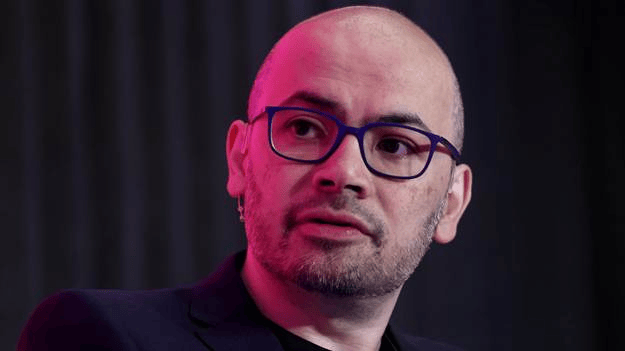
The top skill for the next generation in an AI-driven world? Learning how to learn. Speaking in Athens, Demis Hassabis, CEO of Google DeepMind, said mastering this skill is crucial as AI reshapes education, work, and industries.
Key Takeaways:
Hassabis warned that the pace of AI change is so fast that “the only thing you can say for certain is that huge change is coming.”
He added that AGI (when AI matches humans at most tasks) could be achieved in a decade, bringing dramatic advances and a future of “radical abundance.”
Thriving in this era will require meta-skills—the ability to continually optimize the learning approach to new subjects—alongside traditional knowledge.
Hassabis added that this phase of lifelong learning is unavoidable, noting he is sure that people will have to continually learn “throughout their careers.”
My Take:
This captures the paradigm shift from "20-year career skills" to continuous adaptation cycles. His AGI timeline aligns with my analysis that the three critical agentic AI barriers (persistent memory, multi-agent orchestration, causal reasoning) will be resolved by 2028. Organizations deploying agents today aren't just automating tasks - they're restructuring how human expertise gets applied in an AI-augmented world facing the $10 trillion market transformation.
How to Succeed in Your Agentic AI Transformation
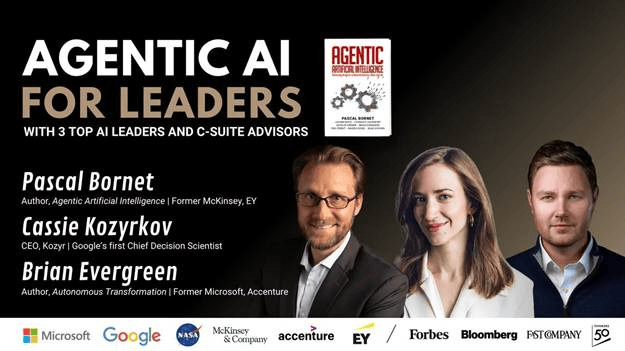
I’ve teamed up with Cassie Kozyrkov (ex-Google Chief Decision Scientist) and Brian Evergreen (author of Autonomous Transformation) to launch a first-of-its-kind course: Agentic Artificial Intelligence for Leaders—built for decision-makers, not coders. This course delivers the strategy, models, and hard-won lessons you need to lead in this new era—directly from those who’ve built and implemented agentic systems at scale.
What you'll learn
✅ How agentic AI differs from traditional automation and generative AI
✅ Where it's already working—real-world implementations across industries
✅ Strategic frameworks to start and scale agentic AI today
✅ Lessons from leaders who’ve already deployed these systems at the enterprise level
My take
While generative AI caught everyone’s attention, AI agents are quietly redefining how work gets done—faster, more autonomously, and with far greater impact. Leaders who understand this shift will unlock new value. Those who don’t may get left behind. Join us for the First Executive Masterclass on Agentic AI Strategy and Implementation ⭐⭐⭐⭐⭐
3️⃣ OpenAI, Google models take gold at ICPC contest
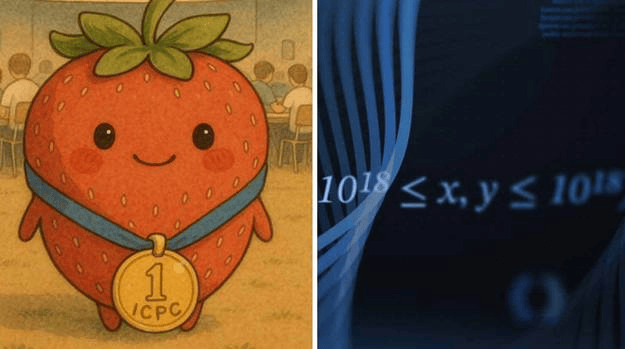
Both OpenAI and Google announced gold medal performances at the 2025 ICPC World Finals, a top collegiate programming competition, with OpenAI’s GPT-5 solving all 12 problems to claim what would be first place among humans.
Key Takeaways:
OpenAI achieved a perfect 12/12 score using GPT-5 and an experimental reasoning model, surpassing all 139 university teams that competed.
Google’s Gemini 2.5 Deep Think finished with 10/12 correct to earn gold-medal status, notably solving one problem that stumped every human competitor.
Both companies competed under official contest conditions with identical constraints as human participants, with the top human team scoring an 11/12.
The achievement comes after OpenAI and Google’s gold-level performances at the IMO, OAI’s IOI gold, and a silver finish at the AtCoder Finals.
My Take:
This achievement marks a watershed moment that validates Sequoia Capital's projection of AI agents addressing a $10 trillion market. We're witnessing the transition from "AI assistance" to "AI autonomy" in specialized domains - exactly what I predicted would happen first in structured problem-solving before expanding to complex business scenarios. The perfect scores signal that competitive programming has joined chess and Go as solved domains, but more importantly, it demonstrates the reasoning capabilities that will power the agentic AI systems currently being deployed across enterprises. Companies betting on multi-agent orchestration platforms like AutoGen and CrewAI should take note: the foundational models are now capable of the complex reasoning required for autonomous business operations.
4️⃣ OpenAI’s GPT-5 Codex for upgraded autonomous coding
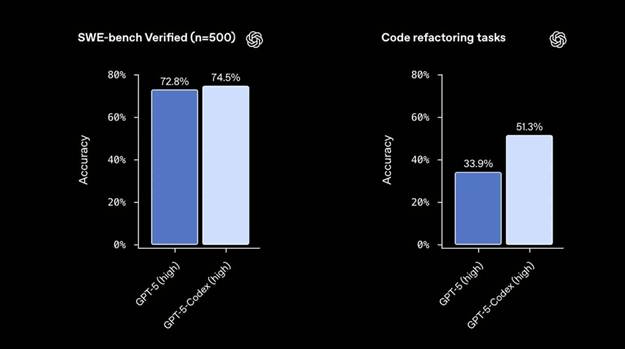
OpenAI just introduced GPT-5 Codex, an upgraded, specialized coding model that can dynamically adjust its compute effort based on task complexity — spending seconds on simple fixes or several hours on more complex issues.
Key Takeaways:
The model outperforms GPT-5 on SWE-bench Verified for real-world software use cases, with even larger gains on refactoring tasks at 51.3% versus 33.9%.
GPT-5 Codex cuts token usage by 94% for simple tasks, while dedicating 2x the reasoning time to complex problems, with autonomous runs of over 7 hours.
Built-in code review capabilities navigate entire codebases, execute tests, and validate dependencies to catch critical software bugs.
The update also includes revamped CLI tools, IDE extensions for VS Code and Cursor, and handoffs between local and cloud environments.
My Take:
The dynamic compute allocation represents major agent architecture evolution - moving from static models toward adaptive intelligence mirroring human cognitive resource management. The 94% token reduction for simple tasks while dedicating reasoning time to complex problems shows efficiency gains driving enterprise adoption beyond current 85% expansion plans. Seven-hour autonomous sessions signal we're approaching the persistent agent capabilities that will transform business operations by 2028.
5️⃣ AI forecasts patient risk for 1,000+ diseases

European researchers just developed Delphi-2M, an AI system that analyzes medical records to calculate individual disease risks across more than 1,000 conditions up to 20 years into the future.
Key Takeaways:
The model studied health data from 400K U.K. patients, learning patterns from doctor visits, hospital stays, and lifestyle habits to spot early warning signs.
Delphi-2M matched or exceeded single-disease models while simultaneously reporting probabilities for 1,258 conditions, including cancer and diabetes.
Researchers verified accuracy by having the AI predict diseases for patients with already known health outcomes, tested on 1.9M Danish records.
My Take:
Delphi-2M exemplifies the specialist agent category that's exploding across healthcare - part of the broader trend toward vertical AI agents I'm tracking in my research. With hundreds of specialized agents already available on platforms like agent.ai, we're seeing the emergence of what I call "domain-specific superintelligence." This development is particularly significant because healthcare represents one of the highest-value use cases in the $10 trillion agentic AI market projection. The 1,000+ disease prediction capability also demonstrates the multi-agent coordination principles I discuss - where single systems can orchestrate complex, interconnected decision-making processes that would traditionally require teams of specialists.
What would you add to this conversation? Did we miss any important news this week? Your voice matters—let’s build the future together.
If you found this valuable, share it with your network. Because very soon, we won’t say, “There’s an app for that.” We’ll say, “There’s an agent for that.”
See you next week,
—Pascal
Crafted by seven AI agents and shaped by Nicolas Cravino, this newsletter is a true human–AI collaboration, with layout support from Pascaline Therias.
#AgenticAI #FutureOfWork #AIRevolution #Automation #AIagents