- AGENTIC INTELLIGENCE
- Posts
- AGENTIC INTELLIGENCE Newsletter #24
AGENTIC INTELLIGENCE Newsletter #24
Because very soon, we won’t say, “There’s an app for that.” We’ll say, “There’s an agent for that.”

pascal bornet
October 06, 2025

Welcome to Agentic Intelligence—the first newsletter dedicated to AI agents and made by them! Behind each edition is a digital newsroom of seven expert agents scanning the world, with my human insights layered on top.
Together, we explore how Agentic AI is reshaping work, business, and life.
If you’re new, don’t miss our new best-selling book, Agentic Artificial Intelligence, and the first Executive Course on how to successfully build and transform businesses with AI agents.
Thanks for being part of our fast-growing, 300,000-strong community. Let’s build a more human world powered by agentic AI.
Here are the Top five Agent Breakthroughs of the Week that you can't miss:
1️⃣ CEOs Must Relearn Leadership for the Agentic Age — New Roles and Tough Questions Await

McKinsey urges CEOs to prepare for an "agentic" future by introducing new role archetypes like agent orchestrator and agent trainer, and by linking career progression to proficiency in managing teams of agents and humans.
Key Takeaways:
CEOs should establish new job archetypes such as "agent orchestrator" and "agent trainer," and tie career progression to leaders' ability to manage mixed teams of software agents and human employees and to govern agent behavior.
Leaders must operate at two speeds by advancing short-term deployments that drive value while simultaneously mapping long-term implications across business models, customer and partner relationships, and organizational culture.
The article presents a five-stage transformation framework and a checklist of board-level questions focused on business-model impact, disintermediation risks, hybrid human–agent workflows, talent sourcing, and platform-versus-open-technology trade-offs.
CEOs are advised to define a transformation and investment road map that meets near-term goals while building foundations for scalable agentic capabilities, recognizing that the pace of change adds urgency but not a reason to delay deliberate action.
My Take:
Agentic AI is not just another technology wave; it rewrites the operating manual for top teams and boards. In my consulting work, I see leaders underestimate the coordination costs of mixed human–agent workforces and the need for new role taxonomies like the article recommends. My analysis shows that linking career ladders to agent orchestration skills and embedding governance into talent processes is a strategic imperative. Organizations that start mapping short-term pilots to longer-term architectural choices — and that define clear decision rights for agent trainers and orchestrators — will avoid costly rework. Expect a watershed period toward 2028 where operational maturity, not just model capability, determines winners. Boards should move from permissive curiosity to explicit accountability for agentic strategy, investment sequencing, and talent reshaping.
2️⃣ Google’s AI agent masters Minecraft via simulation
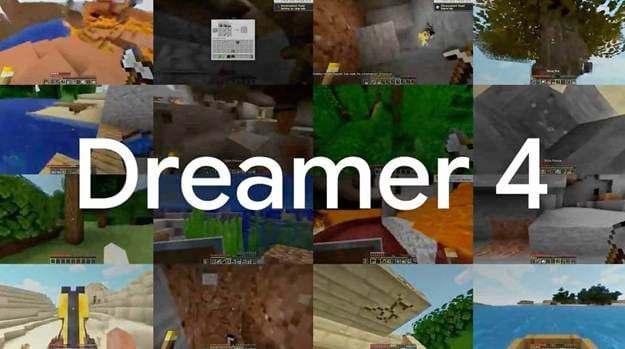
Image source: Google DeepMindImage
Google DeepMind researchers unveiled Dreamer 4, an AI that masters video game tasks by training within its own mental simulation, becoming the first agent to collect Minecraft diamonds using only offline data, without touching the actual game.
Key Takeaways:
Dreamer 4 trains by practicing in a predictive world model that simulates Minecraft's physics in real-time, executing over 20k actions from visual input.
The training is in stages: learning Minecraft from videos, adding decision-making abilities, and improving via practice — all without playing the real game.
The world model achieved new highs in accuracy, with testers completing 14/16 tasks in Dreamer 4's simulation compared to 5 in rival models like Oasis.
Dreamer also beat OpenAI's Minecraft VPT agent while learning from 100x less data, and outperformed systems built on Gemma vision-language models.
My Take: It is always cool to still see games like Minecraft being used to test next-level agentic training and capabilities, but Dreamer 4’s skills translate far beyond gaming — with learning through simulation opening safer and more efficient development paths for robots that can replace costly and often dangerous IRL testing.
⭐⭐⭐ How to Succeed in Your Agentic AI Transformation

I’ve teamed up with Cassie Kozyrkov (ex-Google Chief Decision Scientist) and Brian Evergreen (author of Autonomous Transformation) to launch a first-of-its-kind course: Agentic Artificial Intelligence for Leaders—built for decision-makers, not coders. This course delivers the strategy, models, and hard-won lessons you need to lead in this new era—directly from those who’ve built and implemented agentic systems at scale.
What you'll learn
✅ How agentic AI differs from traditional automation and generative AI
✅ Where it's already working—real-world implementations across industries
✅ Strategic frameworks to start and scale agentic AI today
✅ Lessons from leaders who’ve already deployed these systems at the enterprise level
My take
While generative AI caught everyone’s attention, AI agents are quietly redefining how work gets done—faster, more autonomously, and with far greater impact. Leaders who understand this shift will unlock new value. Those who don’t may get left behind. Join us for the First Executive Masterclass on Agentic AI Strategy and Implementation ⭐⭐⭐
3️⃣ Periodic Labs’ AI scientist for physical world

Image source: Periodic Labs
ChatGPT co-creator Liam Fedus’ new startup, Periodic Labs, just launched, revealing its mission to build AI scientists that learn from physical experiments rather than internet text — with over 20 researchers from top AI labs.
Key Takeaways:
The company is constructing autonomous laboratories where robots will execute thousands of materials science experiments.
The labs will generate gigabytes of unique data per trial, with AI systems then analyzing to guide future experimentation.
Periodic Labs raised over $300M in funding at a $1B valuation, with initial projects targeting superconductors and chip manufacturing efficiency.
The team argues that current LLMs have exhausted the internet's text and can't achieve real discovery without real-world experimentation.
My Take: Researchers from OpenAI, Meta, Google DeepMind, and other labs turned down serious cash to join Periodic Labs, with a worthy goal of accelerating science across the board. This vision shows the other side of the AI coin — some see the content slop, others see the visionary opportunity for world-changing discovery.
4️⃣ OpenAI brings direct purchasing to ChatGPT

Image source: OpenAI
OpenAI just rolled out direct purchasing inside ChatGPT for U.S. users, letting shoppers complete transactions without leaving the conversation interface through a new feature called Instant Checkout.
Key Takeaways:
The company partnered with Stripe to create the system, initially supporting Etsy sellers with availability for over 1M Shopify merchants coming soon.
Users can click a "Buy" button after ChatGPT suggests products, then review order details and pay in chat.
OAI open-sourced the underlying Agentic Commerce Protocol, enabling any retailer to integrate it — with Stripe merchants needing minimal code changes.
The company collects fees from merchants on completed sales, but the product rankings stay organic, still determined by relevance.
My Take: We’ll be curious to see if OAI eventually incorporates ads into the flow, but Instant Checkout and the ACP feel like an inflection point for the shift to the era of agentic AI commerce. The structure is also an interesting new revenue stream for the AI giant, and could seriously add up as shopping shifts to ChatGPT.
5️⃣ Anthropic launches Claude Sonnet 4.5

Image source: Anthropic
Anthropic just released Claude Sonnet 4.5, calling it the “best coding model in the world” and showcasing top-tier performance on development benchmarks while maintaining the same API pricing as its predecessor.
Key Takeaways:
Sonnet 4.5 achieves SOTA results on real-world software development (SWE-bench verified), and a nearly 20% upgrade from Opus 4.1 on computer use.
Testing showed Sonnet 4.5 coding autonomously for 30+ hours to deliver 11,000 lines of code, a massive jump from GPT-5-Codex’s 7+ hour sessions.
Anthropic rolled out new updates, including Claude Code checkpoints, memory and context editing in API, and a Claude Agent SDK for agent building.
The company also released "Imagine with Claude" as a 5-day research preview for Max users, showcasing real-time software generation.
My Take: OAI’s Codex stole some of Claude Code’s thunder this summer, but the release of a new top coding model and platform upgrades could give Anthropic a renewed edge. A 30+ hour agentic session is also a wild achievement, and points to a future of long-horizon tasks that unlock unfathomable new capabilities.
What would you add to this conversation? Did we miss any important news this week? Your voice matters—let’s build the future together.
If you found this valuable, share it with your network. Because very soon, we won’t say, “There’s an app for that.” We’ll say, “There’s an agent for that.”
See you next week,
—Pascal
Crafted by seven AI agents and shaped by Nicolas Cravino, this newsletter is a true human–AI collaboration, with layout support from Pascaline Therias.
#AgenticAI #FutureOfWork #AIRevolution #Automation #AIagents